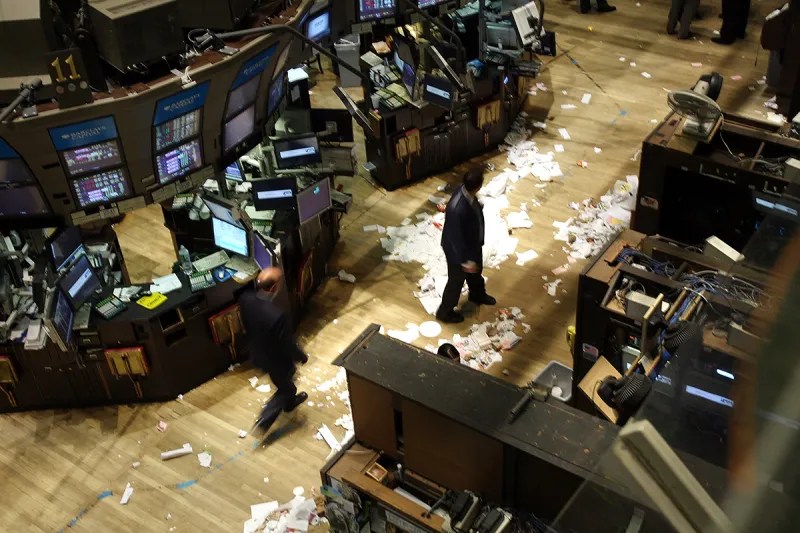
The 2008 economic crisis, often referred to as the Global Financial Crisis, was a significant financial downturn that had widespread effects on economies around the world. Below are the primary causes and consequences.
Causes:
Vast amounts of money were invested in real estate assets or loans after the 1997 Asian financial crisis (which led to foreign inflows) and the burst of the dotcom bubble in 2000-2002 (which led to Fed target rate cuts); let’s stick to safe yield-generating investments!
Real estate prices began to increase at a fast pace (1997-2006), thus attracting more and more speculation; after all, land is fixed and population is growing so prices can only go up, right? plus look at all the money Joe next door made flipping land in Florida: if he can do it, so can I!
Loans were made on aggressive terms (>100% LTV, adjustable rate mortgages with low initial payments and subsequent step-ups) to unworthy borrowers (insufficent cash flows) as mortgage lenders competed for market share; after all, real estate prices keep increasing so the borrowers will be able to refinance their loans down the line, right? Plus, as long as I’m getting my commission and can distribute the mortgage loan to someone else, who cares right?
These loans were often bought by investment banks and sold (by the hundreds) to special purpose vehicles financed with borrowed money (90% LTV), the latter being insured against defaults by insurance companies (via credit default swaps) and vetted by rating agencies (who gave their AAA blessing to senior tranches); after all, not all the loans will default at the same time so we are protected by diversification, right?
Once there were no one else to turn to, prices started to decline (Q2-2006)
Borrowers began to have difficulties paying the step-up rates and ultimately defaulted, their property was foreclosed and put for sale, which compressed asset prices and caused more defaults; hang on, I though real estate prices could only go up?
With so much vacant property for sale, the construction industry nosedived (2006-2010); ouch
Financial institutions who issued, bought (often with borrowed money) or insured these loans went into trouble and some went bust because their peers would not lend them to refinance their own liabilities; hang on, weren’t these loans supposed to be diversified? weren’t insurers supposed to insure us against defaults? aren’t banks supposed to be supervised?
The Fed had to step in as a lender of last resort and some companies were but nationalized; really?
The credit market froze, consumers and corporations started to panic and cut on their spending and hiring plans, which caused GDP to decrease, unemployment to increase (2007-09) and the stock market to collapse (-50% from its peak in 2007 to its trough in 2009); this is starting to sound like 1929 all over again…
Unemployment benefits skyrocketed, causing budget deficits and public debt/GDP to soar, so much so that rating agencies and investors became worried, and many sovereign issuers lost their golden AAA status; hang on, is this even possible? aren’t sovereign bonds supposed to be “risk-free”?
And so on and so forth, until things started to stabilize again following massive government and central bank intervention (until the next crisis that is…)
Consequences:
Economic Recession:
– The crisis triggered a severe global recession, leading to significant contractions in economic activity, high unemployment rates, and reduced consumer spending.
Bank Failures:
– Major financial institutions, such as Lehman Brothers, collapsed or required government bailouts. This led to a loss of confidence in the banking system.
Government Intervention:
– Governments worldwide implemented stimulus packages and bailout programs to stabilize their economies, including the Troubled Asset Relief Program (TARP) in the U.S.
Long-Term Unemployment:
– The recession caused long-lasting job losses, with many individuals facing extended periods of unemployment and underemployment.
Public Debt:
– Increased government spending to combat the recession led to higher public debt levels in many countries.
Regulatory Reforms:
– In the aftermath, significant regulatory reforms were enacted, such as the Dodd-Frank Act in the U.S., aimed at increasing oversight of financial institutions and preventing future crises.
Social Impact:
– The crisis exacerbated income inequality and led to increased public discontent, contributing to political movements and changes in leadership in various countries.
Shift in Economic Power:
– The crisis marked a shift in economic power dynamics, with emerging economies like China gaining influence while developed economies struggled to recover.
The 2008 economic crisis had profound and lasting effects on the global economy, shaping financial regulations and economic policies for years to come.
The most shocking video can be found below:

 Prepper1cense