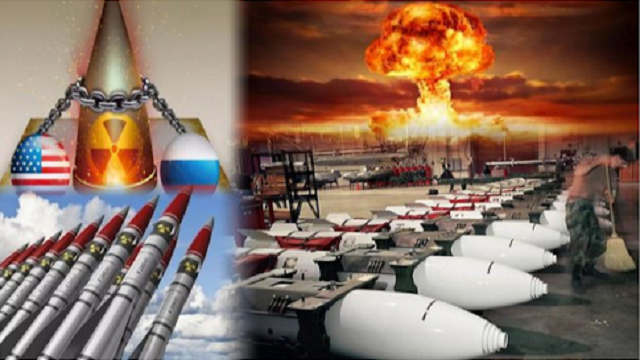
This article is from my grandparents perspective!
A nuclear war would be anticlimactic
Before the angry comments begin, I don’t mean anticlimactic in the sense of I hoped for more, or that I am attempting to downplay death and destruction. Rather in a sense of it being nowhere near the grand apocalypse what we’ve come to expect. I grew up in the 1980s and the prevailing opinion was that any nuclear war would be “the last war”. Humanity would be wiped out, all major cities would be struck, the Earth would be rendered uninhabitable, etc. This is so deeply entrenched in people’s understanding of the world, it’s never really questioned.
There’s the quote often attributed to Albert Einstein:
I do not know with what weapons World War III will be fought, but World War IV will be fought with sticks and stones.
There are, however, a handful of variables that make this outcome extremely unlikely:
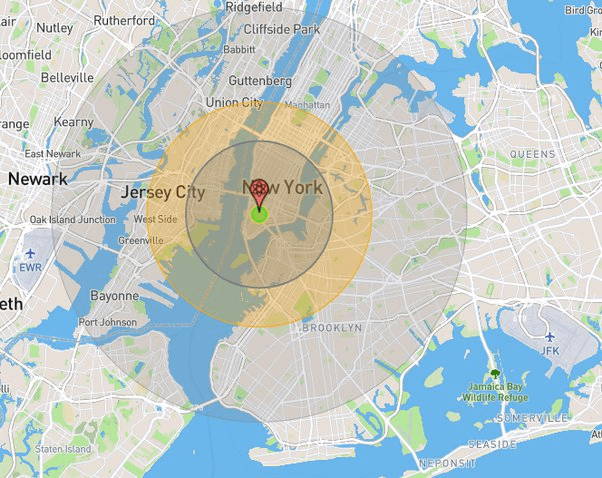
- The grossly distorted public idea of how destructive a nuclear bomb actually is. I got angrily shot down in another answer on this topic a while back, with the commenter telling me “a single nuke could cause an Extinction Level Event”. Errr… no. A single nuclear warhead actually destroys an area of a few square miles and causes damage to maybe a few hundred square miles. They’re catastrophically destructive compared to conventional ordnance, but surprisingly local in a global sense. They don’t even come close to the destructive power of some erupting volcanos, and they’re a pin-prick in comparison to cosmic impacts from asteroids. A 300kt airburst strike over downtown New York would leave Central Park with only light damage; if you’re inside the green circle, you’re toast. The blue circle? probably toast. Outside of it, you’ve got an increasingly decent chance of surviving. While there would be millions with injuries and burns, about 85% of New Yorkers would survive a direct nuclear strike on the city.
- … Nukes are not giant planet-crackers. They never were. It’s a good job really, considering there have been thousands of nuclear explosions over the years in various tests. The combined yield of ALL of the world’s deployable warheads is not actually as big as you’d think. And “deployable” is the operative word here, because…
- The Hollywood idea of a nuclear war is a sudden case of “the fur flying”. One missile goes, so they ALL go at once and the world is radioactive cinder an hour later. And as the US and Russia have thousands of warheads, that’s a lot of “stuff” in the air at one time, right? Except, that’s not remotely realistic. Having every available warhead loaded onto an ICBM or onto a bomber, and having them all primed and ready to go at a moment’s notice, just isn’t how it works. A lot of those thousands of nukes are in storage, and there aren’t necessarily the delivery mechanisms to get them all in the air at once anyway. And as the Ukrainian war has shown us just how badly corruption has undermined the Russian military, are we really that confident they could get all of their nuclear stockpiles stood up and launched in a matter of hours? Sure, both sides would get a decent amount of stuff in the air from submarines and mobile missile silos, but for a lot of the other stuff, they might not actually get them in the air at all, because…
- The idea that “cities would be first” is a popular trope, but makes no real sense. It’s an evocative image… the Bond villain style computer with a wireframe map of the world programmed with a variety of US cities to destroy. But doing this would be pointless. Strategically, the first thing you’d want to knock out is the other person’s ability to hit you. That means targeting their naval bases, airforce bases, known concentrations of military hardware, missile silos, storage depots, command and control centres, communications centres, air defence systems, etc. Your primary aim isn’t to eradicate the human race, it’s to render your opponent a non-threat. So a lot of the warheads (or the capabilities to launch them) would be destroyed before they even got in the air because they would be the targets in the first volley. Beyond cities that contain strategic military assets (and possibly seats of government), population centres would be left untouched because going after them would be a waste of your rapidly-decreasing ordnance.
- Finally, the most controversial one. Nuclear Winter. The general idea is that nukes cause fires, fires cause soot, and put enough soot in the atmosphere, and you block out the sun, reduce the temperature, and cause a collapse in ecology. The issue is, these models usually overemphasise the concurrent number of explosions, wrongly assume predominately urban strikes, overemphasise the amount of flammable material in a city, and assume perfect weather conditions to get the soot into the upper atmosphere. The science of Nuclear Winter is largely bunk, has been for decades, but no scientist wants to publicly correct the narrative because the fear of Nuclear Winter is actually one of the few pieces of propaganda that mutually benefits all sides. It overemphasises the consequences and therefore the risks of engaging in a nuclear war. It’s in everyone’s best interests to “play along”.
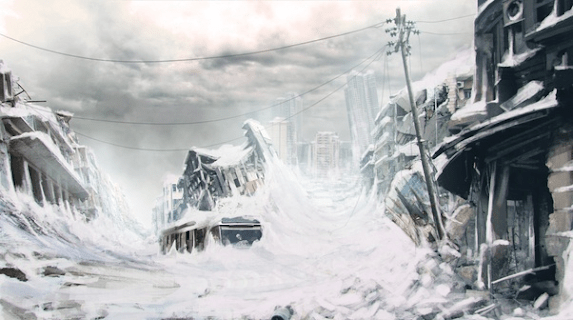
So what would it look like?
An engagement of a few hundred strikes, in tit-for-tat waves, over the space of a few days, targeting military installations. It would disproportionately affect Russia as the US missile defence system, while far from perfect, is more advanced and would be more successful at knocking some incoming missiles out. There would be frantic diplomatic work from neutral parties to try and de-escalate. When it fizzles out, there would be hundreds of thousands dead, predominately military personnel. Hundreds of separate wildfires in forests and grasslands would cause a slight, temporary decrease in global temperatures. The limited** fallout would kill thousands in the following days and many more of cancer (across the whole Northern Hemisphere) over a period of several years. Despite this, >99% of the World’s population would survive unscathed. In fact, most people around the world (particularly in the Southern Hemisphere) would spend the “nuclear war” going to work, going to school, and basically getting on with their lives.
However, there’d be a sudden crash to the global economy, international trade would be disrupted, there’d be painful shifts in geopolitical power, and the disruption, recessions and civil unrest would last for years. It’s not like the war would end and everything would go back to normal. The consequences would be painful.
Paradoxically, the fact that the global nuclear war didn’t wipe everyone out and the realisation that MAD was no longer a “thing”, would be catastrophic long-term. It would relegate nuclear weapons to viable battlefield assets, increase the likelihood of them being used in minor regional conflicts, and start a “new arms race” of countries that wouldn’t otherwise have considered having them.
** “Fallout” is predominately caused by ground impacts, through which thousands of tons of soil, dust and debris is ejected into the atmosphere and then falls back to earth as radioactive particles (hence “fallout”). But most nuclear strikes are detonated high in the air (although strikes to destroy bunkers and underground installations will be intentional ground impacts). Airbursts do more damage to surface buildings (and people) over a wider area. But beyond the initial burst of ionising radiation, the lasting effects of radiation is quite limited, as there’s not a lot of ejecta and therefore very little fallout.
If you have any dissatisfaction with my content, you can tell me here and I will fix the problem, because I care about every reader and even more so about your opinion!
 Prepper1cense